
Best Butter Injection for Turkey




Cooking a Turkey is easier than ever! Follow my simple recipe for preparing and roasting a delicious and juicy Thanksgiving Turkey that will impress the whole family!
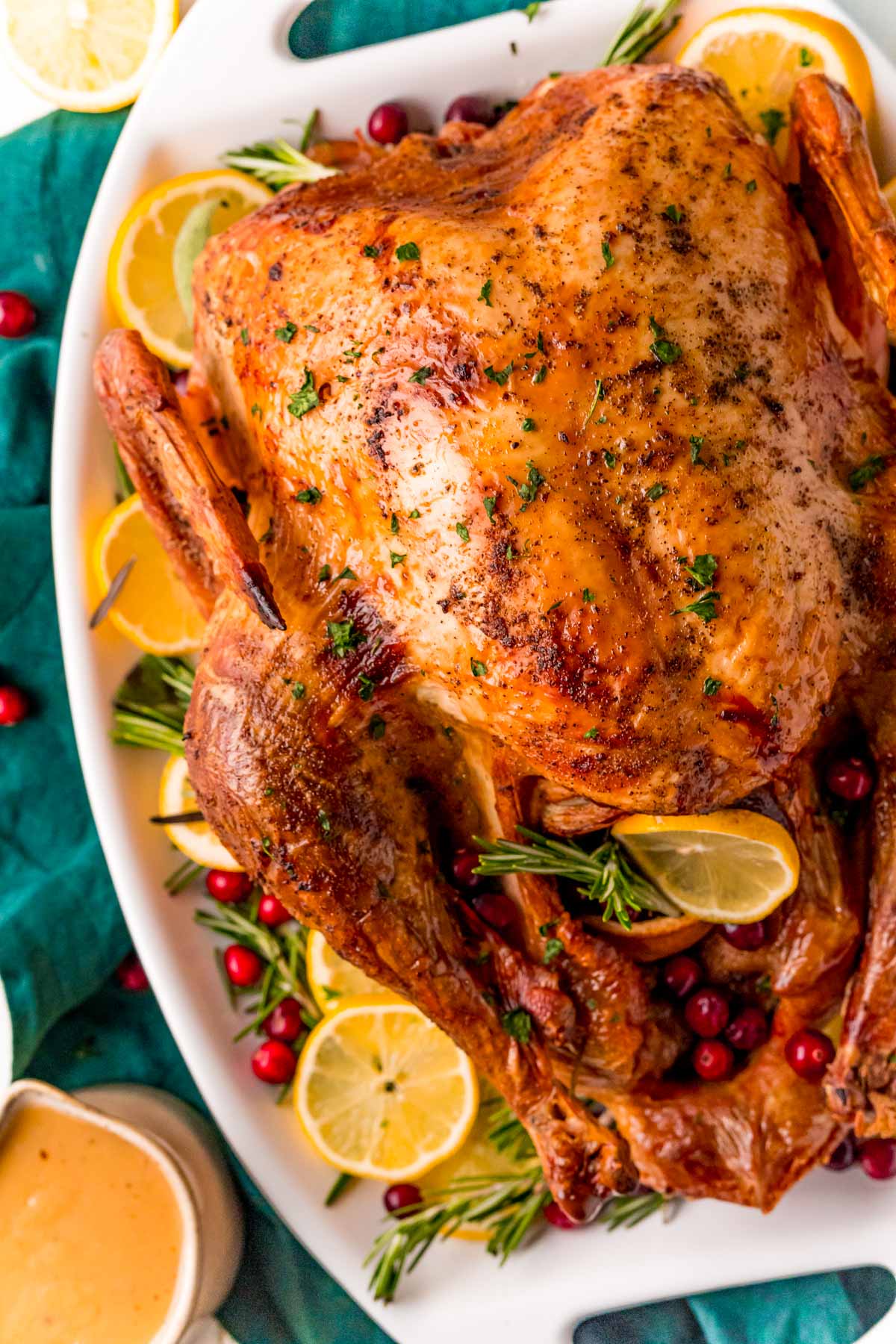
You Will Love This Turkey Injection Seasoning
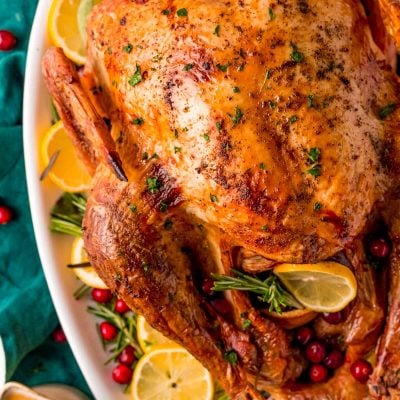
This Roast Turkey recipe uses a lemon butter injection marinade that penetrates the turkey for moist, flavorful meat. Topped with a simple dry rub and a few other tricks for crispy skin and a tender and juicy bird!
Taking on the role of host or hostess at Thanksgiving can feel a little daunting, especially since it usually means you’re the one in charge of cooking the turkey.
However, it’s actually really easy to make a juicy, flavorful, and perfect turkey. It’s a multi-step process, and you’ll need a few uncommon kitchen tools, but I promise you, even the most unskilled home cook can pull off this amazing turkey recipe!
Rebecca’s Recipe Review
Taste: Savory, seasoned flavor.
Texture: Juicy, moist meat covered in deliciously crispy skin.
Ease: 5/10
Pros: A dependable recipe with step-by-step instructions that delivers moist, juicy meat every time!
Cons: None.
Would I Make This Again? Yes, this is my go-to for the Thanksgiving turkey!
“Gangster. Inject and add the herb butter under the skin, well worth it. I did a 12lb turkey, temped to 160 and she rose to exactly 165. Took me about 3.5 to cook to 160. Everyone raved and praised me. Then they began to chant and call me king Adam while hoisting me up on their shoulders. It was magnificent. Thanks for the recipe.”
– Adam
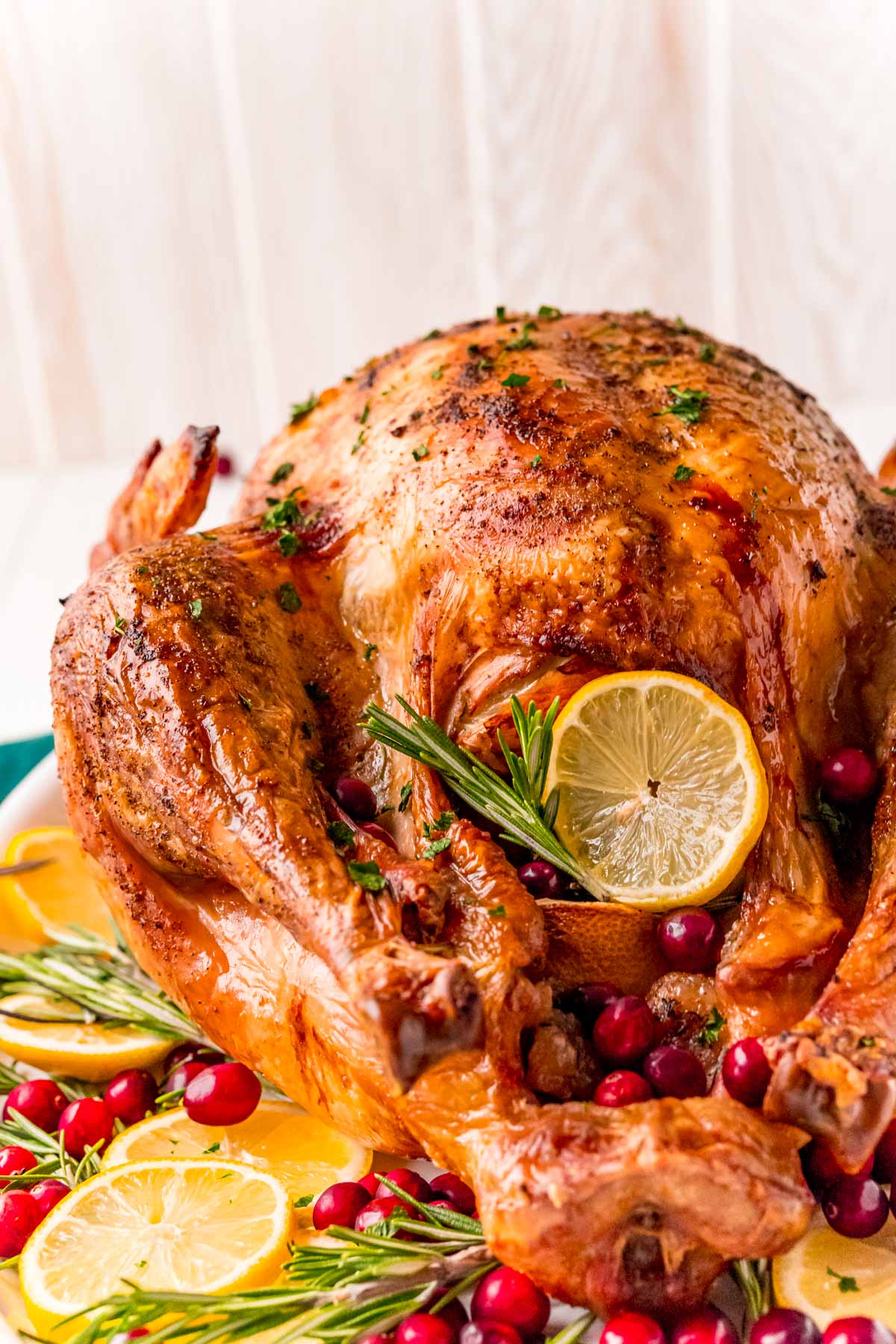
Ingredients For Injectable Turkey Marinade
This turkey recipe really makes a statement with a bright lemon flavor. It’s not overpowering but adds acid and vibrance to what might be considered a “basic” herb-roasted turkey.
Injection Marinade
Unlike my Turkey Brine Recipe (which I also highly recommend if you plan ahead), this liquid mixture is made of:
- chicken stock
- butter
- lemon juice
- onion powder
- pepper
- salt
Turkey Rub
This is a simple combination that gets rubbed all over the skin before roasting:
- salt
- black pepper
- garlic powder
- onion powder
Filling
Skip the stuffing and opt for a dressing on the side. Then, fill the turkey with:
- halved lemons
- apples
- onion
- thyme
- sage
- rosemary
These add additional fall flavor and keep the turkey tender.
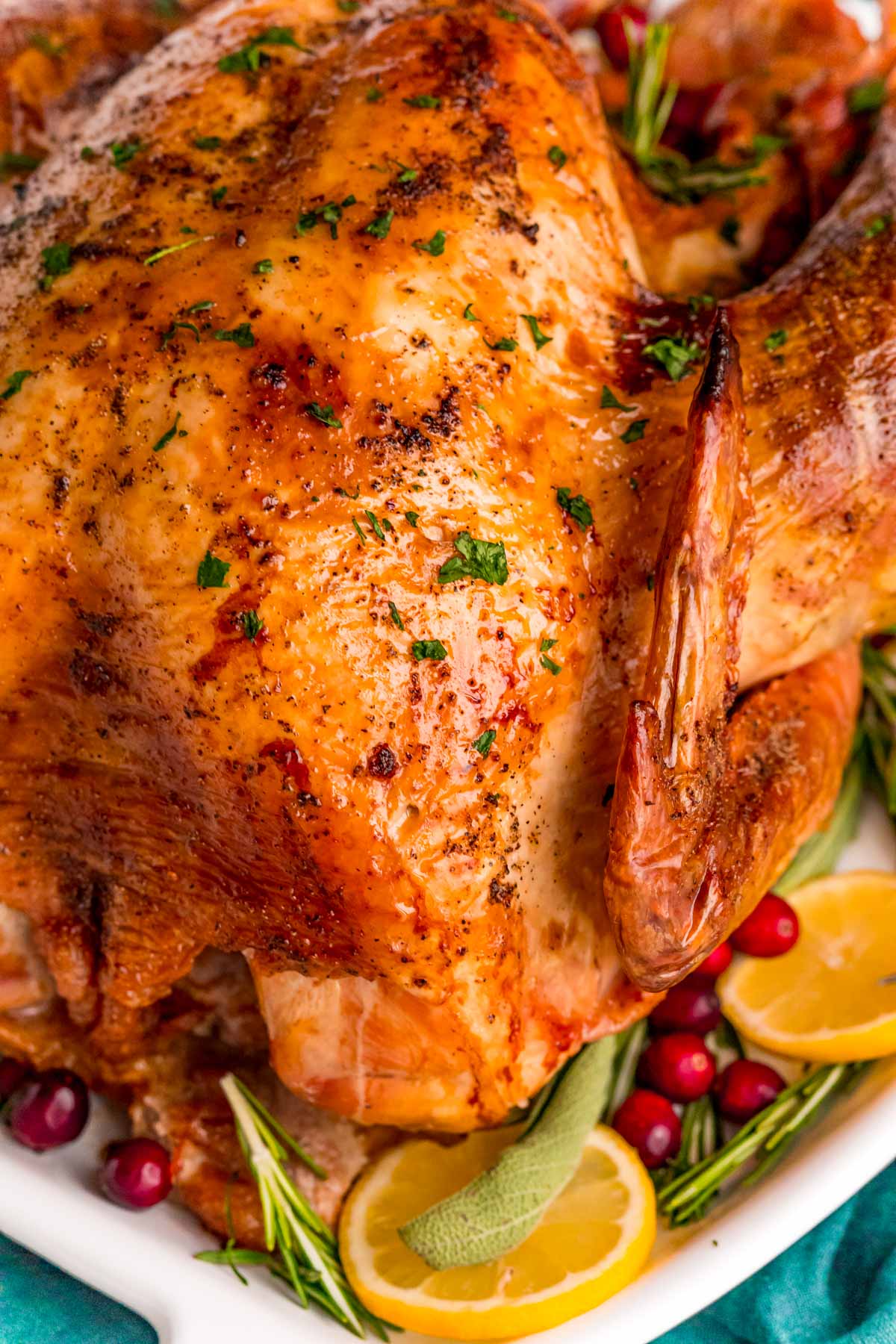
Helpful Tools For This Butter Injection For Turkey
Roasting Pan: When you’re cooking a 14 lb+ turkey, you’ll need a roasting pan. I highly recommend getting one with a roasting rack insert.
This means the heat in the oven can circulate around the entire bird, resulting in more even cooking. It also means the turkey won’t stick to the bottom of the pan. Plus, it will be easier to transfer to a turkey platter.
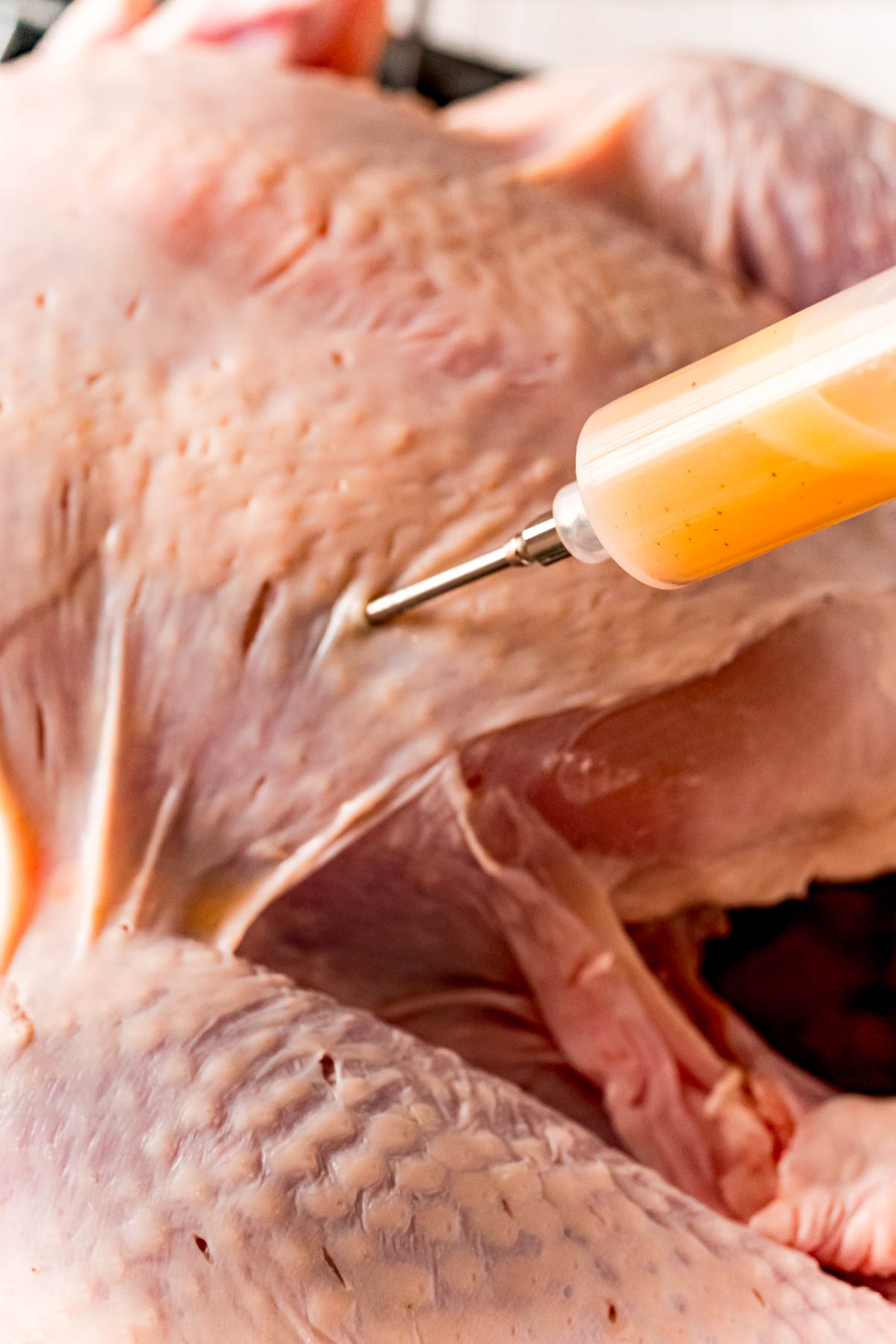
Meat Injector Syringe: You need a large kitchen syringe for the injection marinade. I found one at my local grocery store, so while they’re a little uncommon, they shouldn’t be too hard to find.
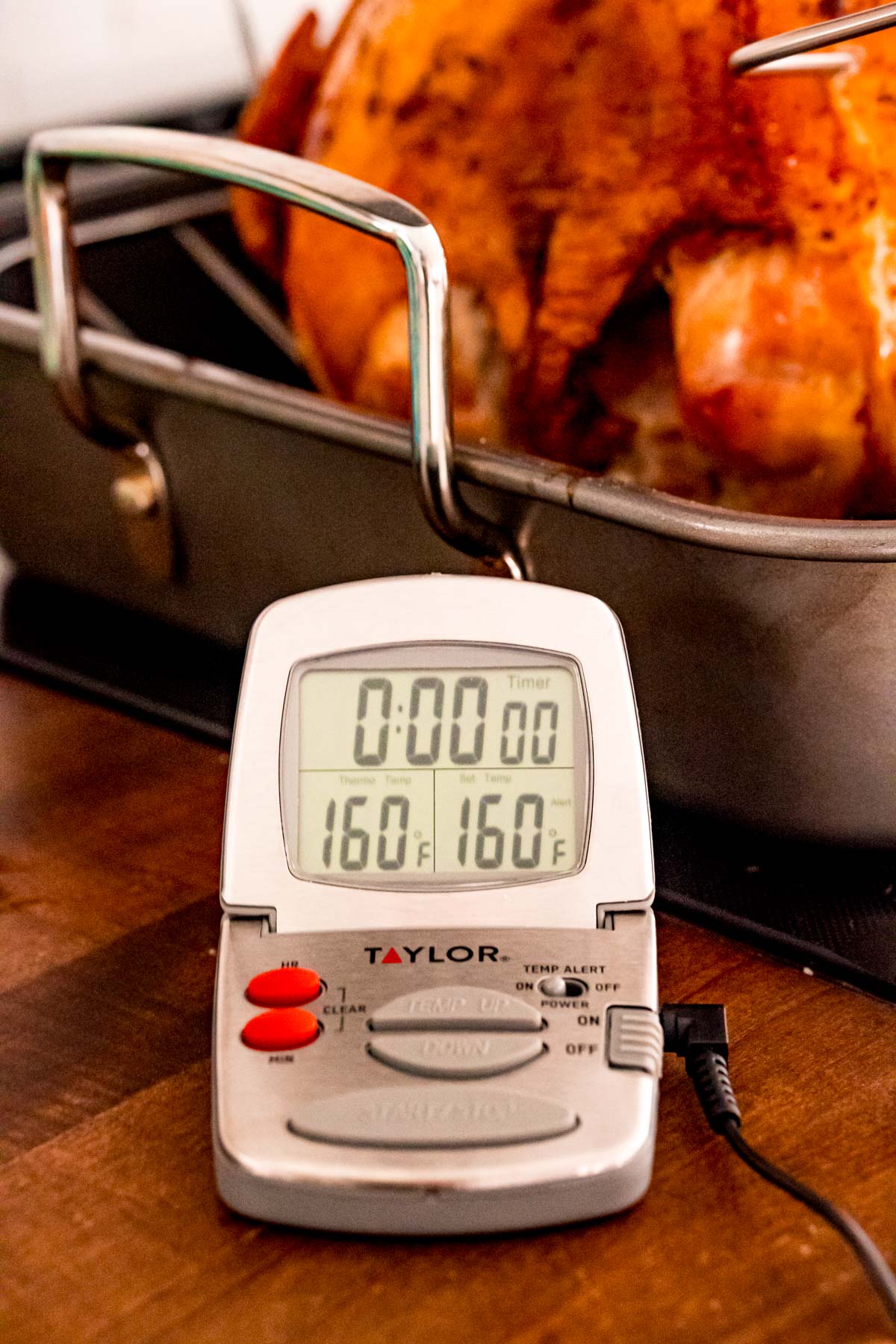
Kitchen Thermometer: This is the ABSOLUTE key to a perfect turkey! Do not rely on the little ones that come with the turkey. I use this stainless steel probe thermometer and love it!
You can set the temperature you want the meat to cook to, and it will go off when it reaches that point. It also has a ton of other features. However, a probe thermometer will ensure you don’t have a dry and overcooked turkey.
Turkey Lifters: After cooking, the turkey will be hot, juicy, and heavy, so it’s best to use a set of turkey lifters to transfer it from the roasting pan to the serving platter.
Carving Set: Having a proper carving set for cutting the turkey will mean nice, clean cuts for serving.
These sets can be really expensive, so if you don’t have one, ask a relative if you can borrow theirs before making the investment, unless you’re going to be hosting year after year!
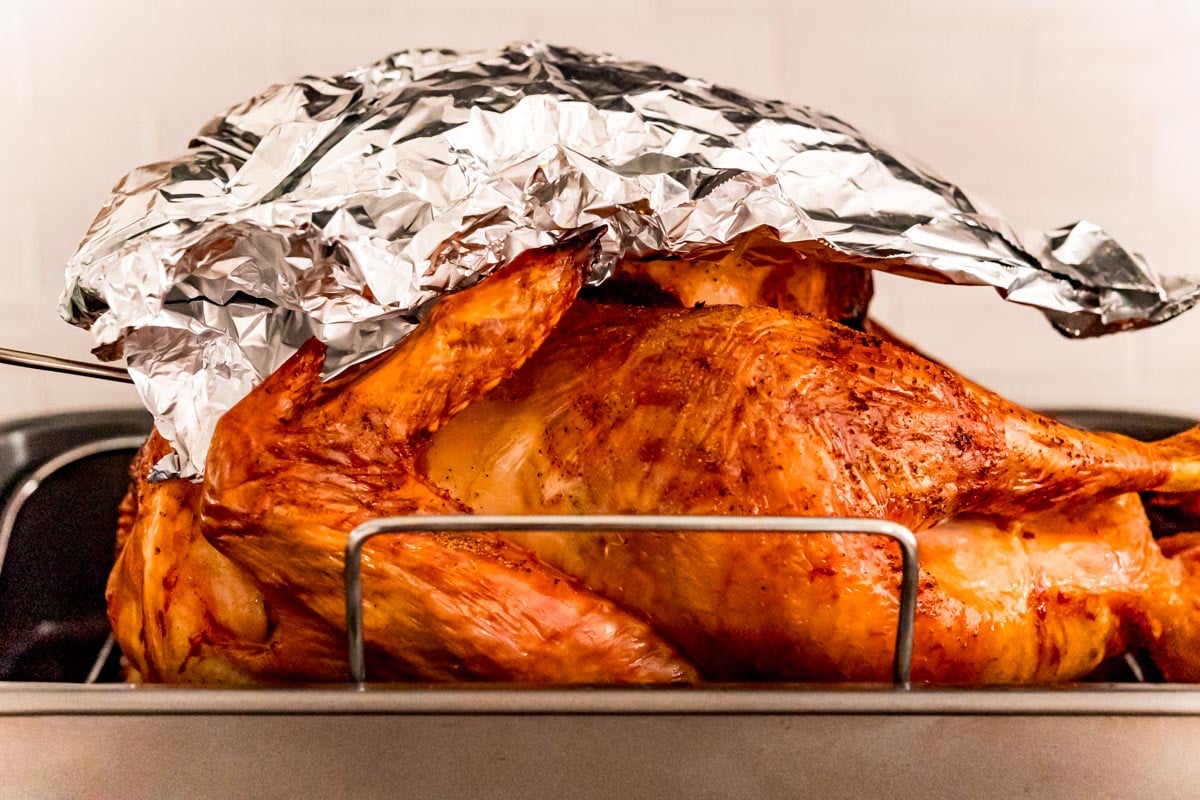
Aluminum Foil: I know it sounds basic, but it’s necessary. This trick from Alton Brown crisps the skin without overcooking the turkey breast while the rest of the turkey is still coming up to temperature.
How To Prepare A Turkey For Thanksgiving With Injectable Turkey Marinade
Even though there are tons of ways to cook it, the most common is by cooking a turkey in the oven. That’s the method used in this recipe, and it’s pretty easy to follow.
How To Marinate A Turkey
- Prepare the turkey by removing the neck and giblets from the cavity of the bird. Hold onto the giblets if you want to make giblet gravy.
- Make the injection marinade by melting the butter with the chicken stock and lemon juice in a small saucepan. Whisk in the onion powder, black pepper, white pepper, and salt. Then, inject the marinade into the thickest parts of the thighs, legs, and breasts. Check out this video for a walkthrough on how to inject a turkey.
- Marinate the turkey overnight for the best results, but the turkey can be cooked in as little as 2 hours after marinating.
- Rest the turkey at room temperature for 30 to 60 minutes before roasting. You can continue with the other preparations while it’s resting.
When To Inject Turkey
You’ll want to inject the turkey immediately after making the marinade due to the melted butter. We don’t want the butter to resolidify. This is why we want to prep the turkey in Step 1 before preparing the marinade. The injection goes right into the raw turkey; then it should set for 2 to 12 hours before roasting for best results.
How To Inject A Turkey Without An Injector
Using an injector will be the easiest and surest way for the marinade to work, but if you don’t have one, you can use a fork or a metal skewer to poke holes all over the turkey, then seal it in a roasting bag with the marinade and let it sit overnight.
How To Season A Turkey For Thanksgiving
- Stuff the cavity with apples, lemons, onion, sage, rosemary, and thyme.
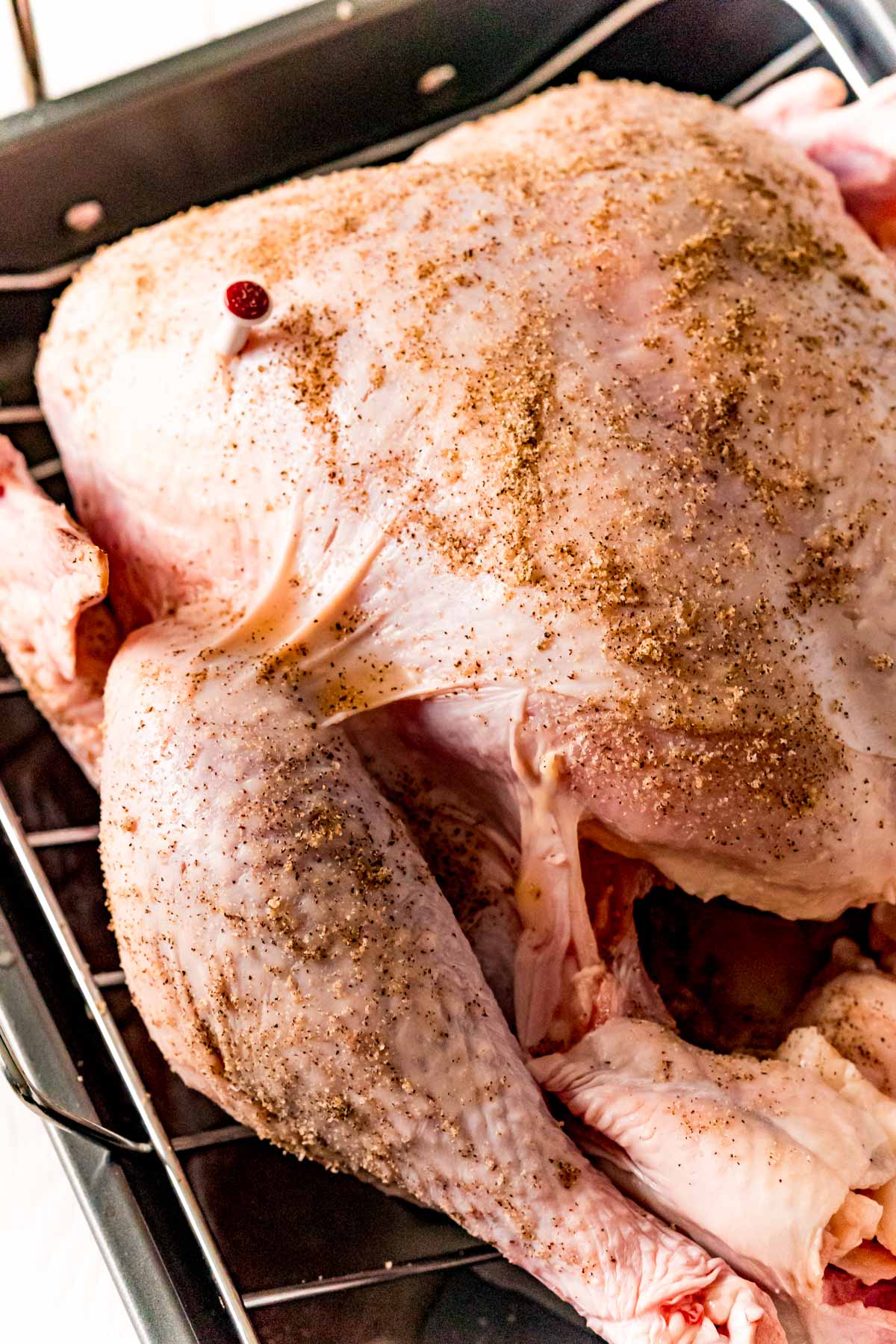
- Pat the turkey dry with a paper towel, then combine the onion powder, garlic powder, salt, and pepper, and rub it onto the skin.
How To Roast A Turkey
- Tuck the wings under the turkey (if you remember, I don’t always).
- Transfer the turkey to the rack in the roasting pan and roast at 450 degrees for 30 minutes.
- Reduce the heat to 350 degrees F and insert the probe thermometer into the thickest part of the breast. Then, place a double layer of aluminum foil over the breast of the bird and continue to cook until the turkey reaches an internal temperature of 160 degrees F.
- Remove the turkey from the oven and allow it to rest for 30 minutes before carving.
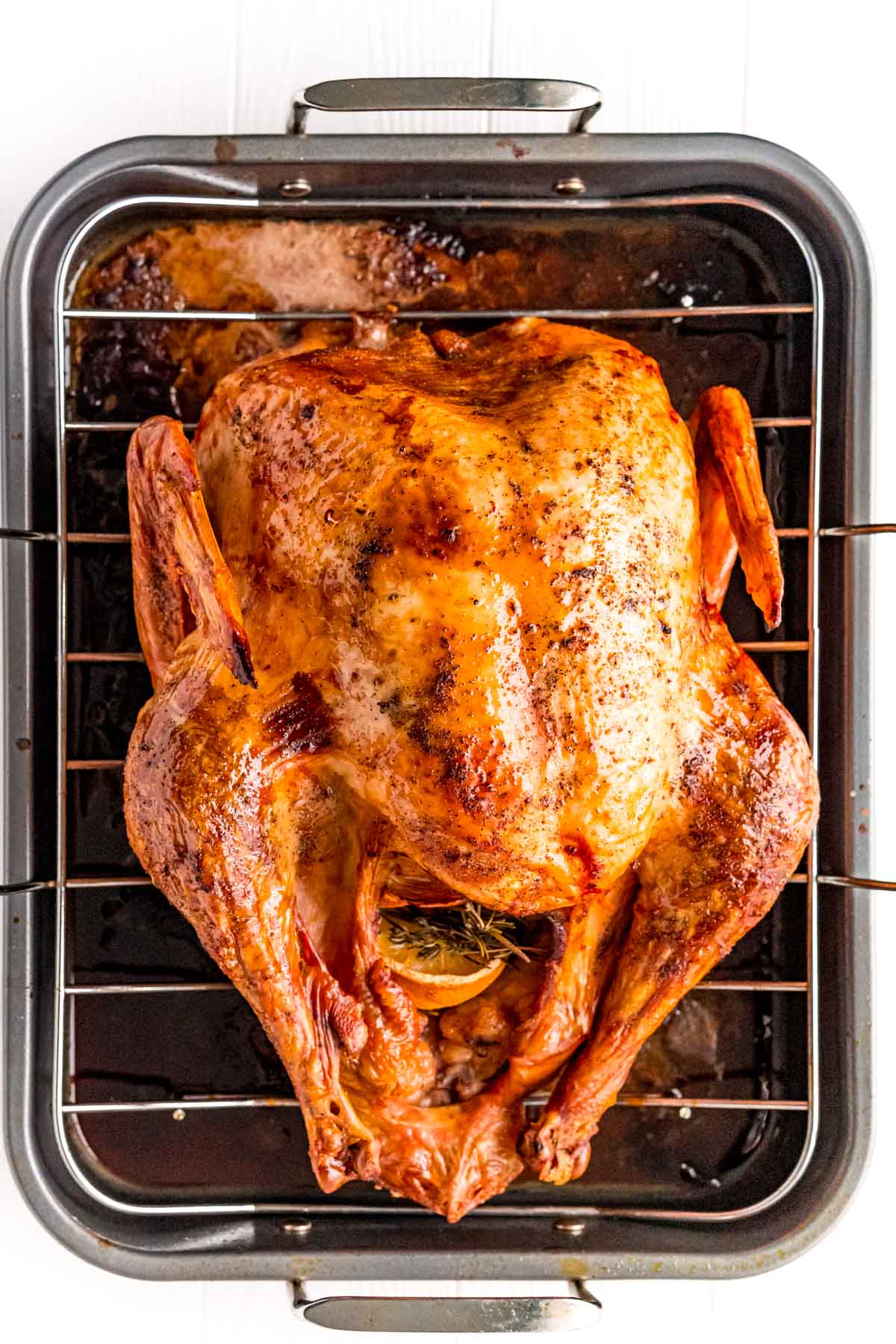
Rebecca’s Roasted Thanksgiving Turkey Tips
- Don’t stuff your turkey! Instead, opt for a dressing that is cooked in its own baking dish. Adding stuffing to the turkey’s cavity usually means the stuffing is underdone or the turkey is overdone.
- Don’t rinse your turkey! The FDA recommends avoiding rinsing any meat before cooking, as it can spread bacteria around the kitchen.
- Start with high heat! Start cooking the turkey at a higher temperature to encourage crispy skin and juicy meat. This recipe cooks at 450 degrees F for the first 30 minutes and then is reduced to 350 degrees F until done.
- Add more flavor! This recipe is already super flavorful, but if you REALLY love that buttery taste, you can use my herb butter recipe to rub between the skin and meat of the turkey.
- Only cook to 160 degrees F! Okay, hear me out! The turkey is considered done at 165 degrees F. However, the turkey also needs to rest for about 30 to 45 minutes before serving, so the juices redistribute. During that time, the turkey will continue cooking, resulting in an overdone bird. But if you pull the turkey out of the oven at 160 degrees F, it should reach 165 degrees F about 20 to 30 minutes after being removed.
How To Serve Roasted Thanksgiving Turkey
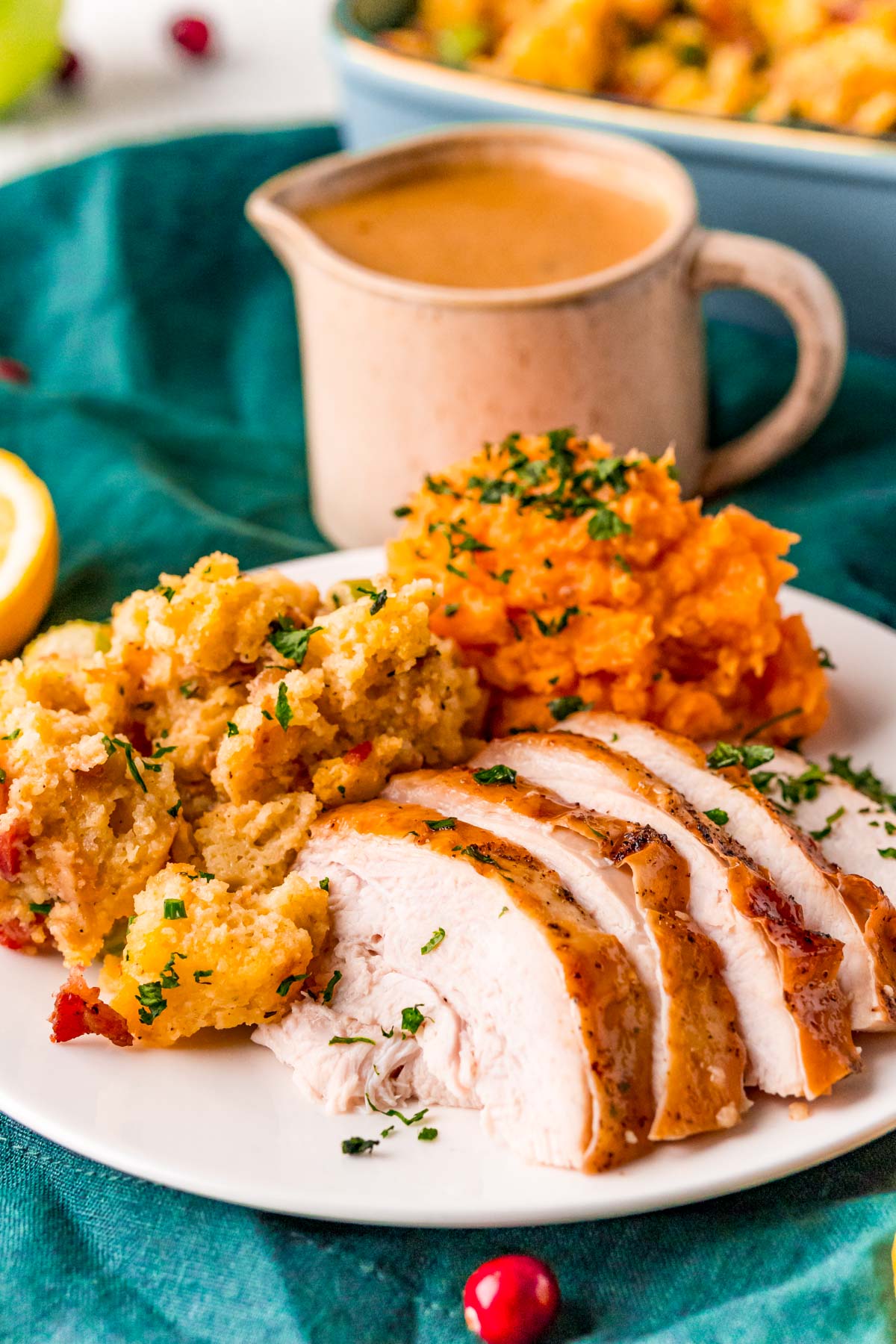
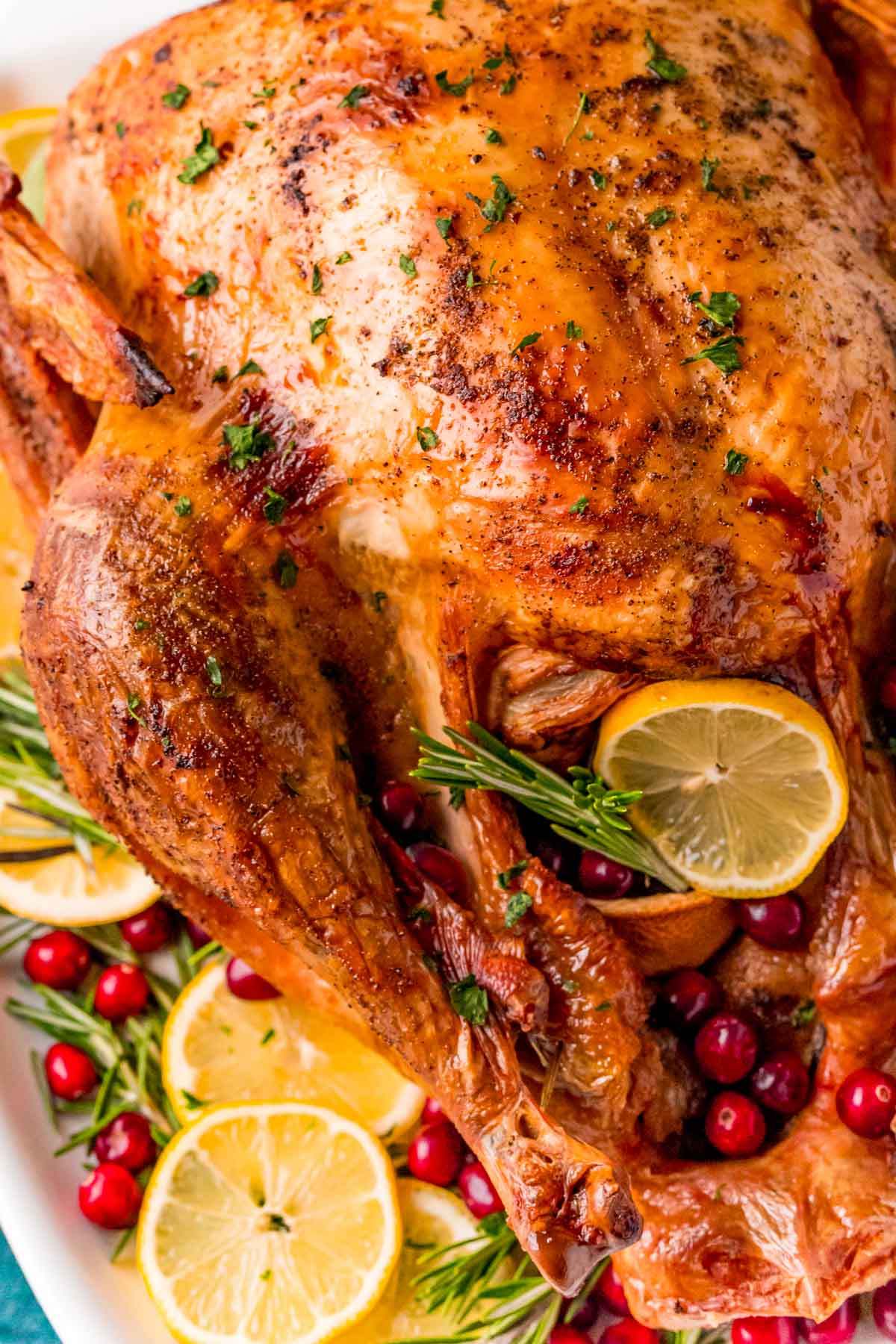
I like to create a beautiful presentation by arranging cranberries, lemon slices, and fresh herbs on the platter around the turkey. I recommend placing the turkey on the table whole and carving it there so it doesn’t get cold or lose a lot of juice before serving.
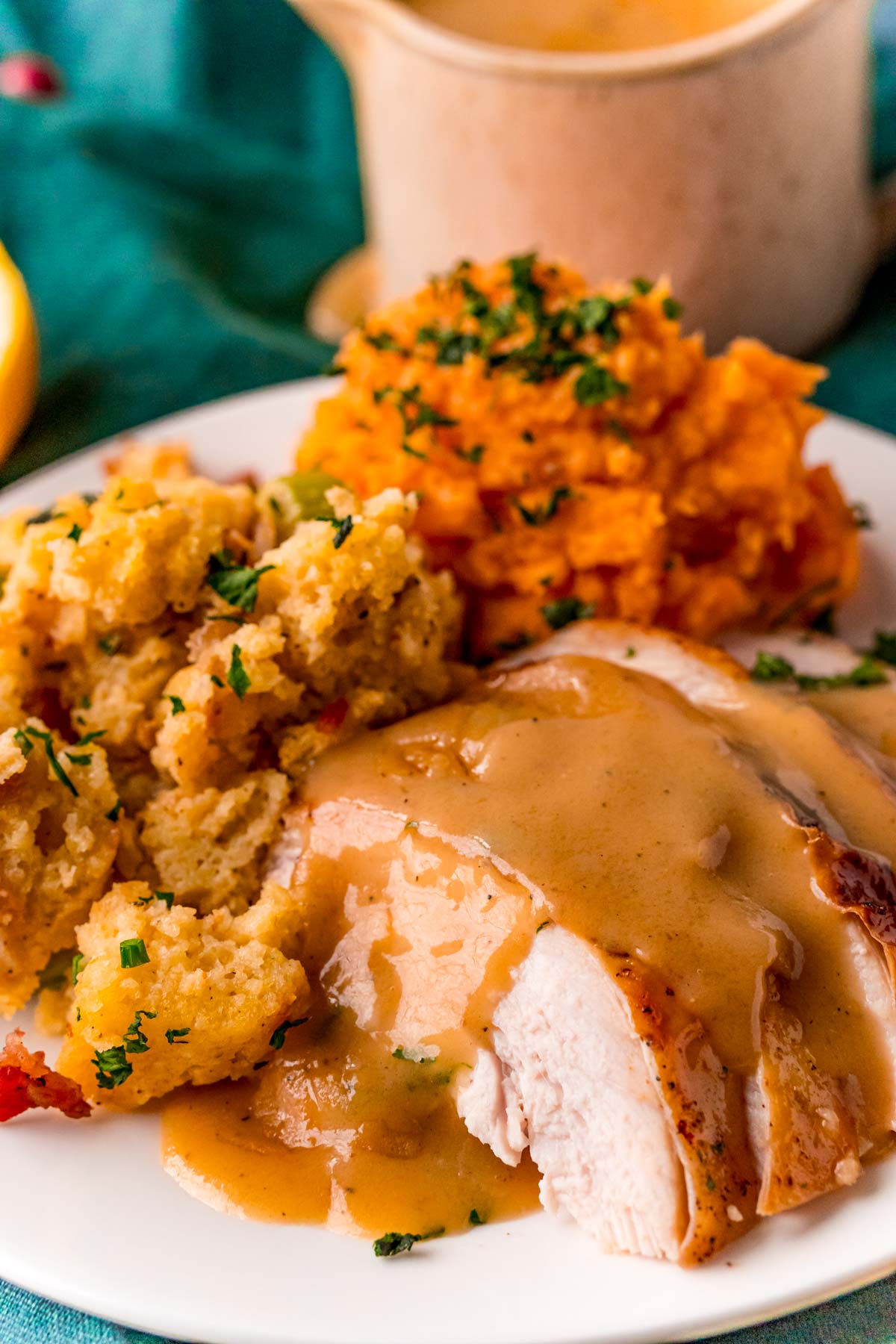
For Turkey Day, we like to go all out with the side dishes; they’re actually my favorite part of the meal! I’m a big fan of Corn Casserole, Mashed Potatoes, and Candied Yams! And don’t forget the Dinner Rolls! Gravy and Cranberry Sauce are also a MUST!
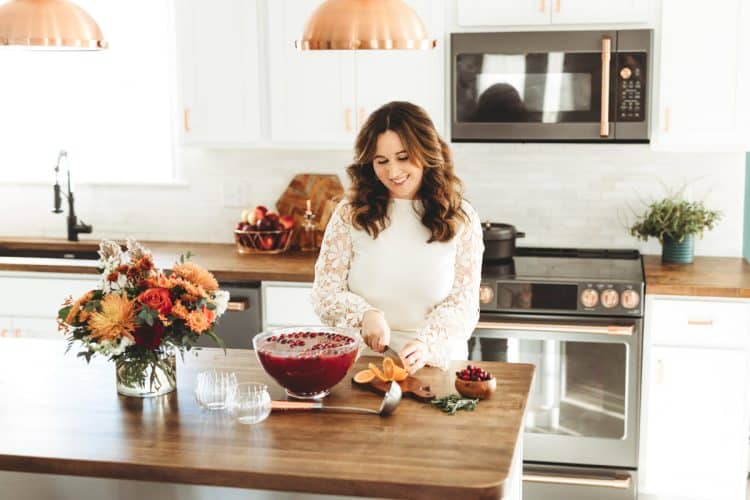
Plus don’t forget to follow this Roast Turkey up with a slice of Pumpkin Pie and serve it with a glass of Thanksgiving Punch!
Do I need to brine my turkey?
No, not with this recipe. Brining is still my favorite way to prepare a turkey, but it takes a lot of preparation and time to do it right. This recipe gets similar results in less time, and you don’t need to have a huge container to submerge a giant turkey in. While some recommend it, I personally wouldn’t do both a brine and marinade because I think the turkey can become too salty and watery.
How long do I marinate a turkey?
With an injection marinade, it’s best if you can let it sit in the refrigerator for 12 to 24 hours after injecting. But if you let it sit for at least 2 hours, you’ll still get a delicious turkey.
How do I thaw a frozen turkey?
If you’re starting with a frozen turkey, the easiest and safest way to thaw it is in the refrigerator. You’ll need 24 hours for every 4 to 5 lbs. If you don’t have that kind of time, you can thaw it in the sink. Fill the sink 1/3 to 1/2 full with COLD water and place the turkey in it. Change out the water every 30 minutes. It will take about 30 minutes for every 1lb. DO NOT run it under warm or hot water.
How long does a turkey take to cook?
Cooking times can vary depending on the starting temperature of the turkey, the recipe method, and your oven. And don’t forget to account for prep and rest time on both ends of roasting. But the general rule is 20 minutes per pound.
Can leftover turkey be frozen?
Absolutely! After cooling, package up any leftover turkey into freezer bags and squeeze out any excess air before freezing.
How Much Turkey Per Person?
The general rule is 1 pound per person, but aiming for 1 1/2 pounds per person is best because it means you’ll have a few days of Thanksgiving leftovers! Here are some size recommendations to guide you:
- 14 people = 20-pound turkey
- 8 people = 12-pound turkey
- 10 people = 15-pound turkey
- 12 people = 18-pound turkey
So there you have it, all my tips and tricks for making the perfect Roasted Thanksgiving Turkey! You can grab the full printable recipe below, and I hope you all have a wonderful holiday!
More recipes to pair with the big Thanksgiving meal!
- Brown Butter Boursin Mashed Potatoes – Made with brown butter and Boursin Garlic & Fine Herbs Cheese!
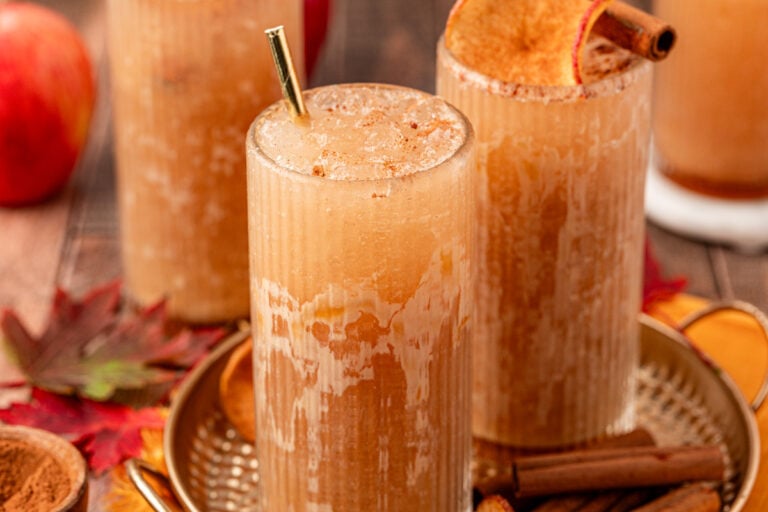
- Apple Crisp Refresher – Sparkling, sweet, and refreshing, a great after-dinner drink!
- Tini’s Mac and Cheese – The internet’s favorite mac and cheese!
- Homemade Turkey Gravy Recipe From Drippings – Savory, smooth, and packed with flavor!
- Soft Pumpkin Chocolate Chip Cookies Recipe – An easy recipe that yields two dozen homemade cookies!
Did You Make This Recipe?
If you’ve tried this recipe, please let leave a review in the comments below. I love hearing from you! Don’t forget to tag me – @sugarandsoulco – on Instagram and Pinterest with your photos, or join our Sugar & Soul Show-offs Community and share them there.
Best Turkey Injection Marinade
Equipment
- Roasting Pan
- Meat Injector Syringe
- Kitchen Probe Thermometer
- Turkey Lifters
- Carving Set
- Aluminum Foil
Ingredients
Turkey
- 1 (12-25lb) whole turkey fresh or thawed
Injection Marinade
- 1 cup chicken stock
- 4 tablespoons salted butter
- 2 tablespoons lemon juice
- 1 teaspoon salt
- ½ teaspoon ground black pepper
- ½ teaspoon ground white pepper
- ⅛ teaspoon onion powder
Filling
- 2 lemons halved
- 2 granny smith apples quartered
- 1 large white onion quartered
- 15 fresh thyme sprigs
- 10 fresh rosemary sprigs
- 10 fresh sage sprigs
Dry Rub
- 1 tablespoon salt
- 1½ teaspoons ground black pepper
- ¾ teaspoon garlic powder
- ¾ teaspoon onion powder
Garnish
- cranberries
- fresh rosemary
- fresh thyme
- fresh sage
- lemon sliced
Instructions
Turkey
- Make sure that your 1 (12-25lb) whole turkey is fully thawed if using a frozen turkey.
- Remove the neck and giblet from the turkey.
Injection Marinade
- Add the 1 cup chicken stock, 4 tablespoons salted butter, 2 tablespoons lemon juice, 1 teaspoon salt, ½ teaspoon ground black pepper, ½ teaspoon ground white pepper, and ⅛ teaspoon onion powder to a small saucepan and cook over medium-low heat until the butter has melted; do not boil. Allow the marinade to cool in the pan for about 15 to 20 minutes. You want it to cool down enough so it doesn't start cooking parts of the turkey, but still be liquid enough to inject.
- Use a large kitchen injector to inject the marinade into the thickest parts of the breasts, thighs, and legs of the turkey. Add the marinade until it starts to flow back over the top of the skin.
- Place the turkey in a large pan or bowl covered with plastic wrap or in a turkey bag to marinade. Marinate for at least 2 hours and up to 24 hours for the best results. Marinating for 12 to 24 will give the best flavor.
Filling
- Remove the turkey from the refrigerator and let it rest for 1 hour. During that time, finish the prep work by beginning to stuff the cavity with prepped 2 lemons, 2 granny smith apples, 1 large white onion, 15 fresh thyme sprigs, 10 fresh rosemary sprigs, and 10 fresh sage sprigs.
Dry Rub
- Pat the turkey down with a paper towel to remove any excess moisture on the skin.
- In a small bowl, whisk together the 1 tablespoon salt, 1½ teaspoons ground black pepper, ¾ teaspoon garlic powder, and ¾ teaspoon onion powder. Then use your hands to rub the mixture all over the turkey's skin.
Roasting
- Preheat the oven to 450°F and place a roasting rack in a roasting pan.
- Transfer the prepared turkey onto the roasting rack and cook in the preheated oven for 30 minutes.
- After 30 minutes, reduce the heat to 350°F and remove the turkey from the oven.
- Insert the probe thermometer into the thickest part of the turkey breast, then cover the turkey breast with a double layer of aluminum foil.
- Place the turkey back in the oven and cook until the internal temperature reaches 160°F.
- Remove from the oven and allow the turkey to rest for 30 to 40 minutes so the juices redistribute. During this resting period, the internal temperature should rise to 165°F.
- After resting, carve the turkey and enjoy. I like to garnish with cranberries, fresh rosemary, fresh thyme, fresh sage, and lemon for a stunning presentation.
Notes
- This recipe makes enough for a turkey between 12 and 25lbs. You may have some injection marinade leftover, depending on the turkey’s size and how much marinade it will hold.
- Opt for a dressing that is cooked in its own baking dish. Adding stuffing to the turkey’s cavity usually means the stuffing is underdone or the turkey is overdone.
- The FDA recommends that you avoid rinsing any meat before cooking, as it can spread bacteria around the kitchen.
- Start cooking the turkey at a higher temperature to encourage crispy skin and juicy meat. This recipe cooks at 450 degrees F for the first 30 minutes and then is reduced to 350 degrees F until done.
- This recipe is already super flavorful, but if you REALLY love that buttery taste, you can use my herb butter recipe to rub between the skin and meat of the turkey.
- The turkey is considered done at 165 degrees F; however, the turkey also needs to rest for about 30 to 45 minutes before serving, so all of the juices redistribute. During that time, the turkey will continue cooking, resulting in an overdone bird. But if you pull the turkey out of the oven at 160 degrees F, it should reach 165 degrees F about 20 to 30 minutes after being removed.
Nutrition
Did You Make This Recipe?
Don’t forget to share it with me on Instagram @sugarandsoulco and follow on Tiktok @sugarandsoulco and Pinterest @sugarandsoulco for more!

Share your thoughts!
Love this recipe? Share your thoughts with me and leave a review! And don’t forget to connect on your favorite social platform below!












Can someone tell me if you can make gravy out of this recipe?
Gangster. Inject and add the herb butter under the skin, well worth it. I did a 12lb turkey, temped to 160 and she rose to exactly 165. Took me about 3.5 to cook to 160. Everyone raved and praised me. Then they began to chant and call me king Adam while hoisting me up on their shoulders. It was magnificent. Thanks for the recipe.
Sounds like a great Thanksgiving 🤣 glad I could assist with the recipe!
6 Stars!! Perfect results!! So juicy throughout!! I made a 15lb & 12lb whole Turkey
Hello, Happy thanksgiving. Im in the process of cooking my turkey with your recipe. I was wondering, will the turkey get brown while the tin foil is left on the entire time of cooking, or should I take the foil off at the end to get the turkey crispy brown?
It will brown perfectly. Remember to just lightly tent the breast and not seal it
What happens (or doesn’t happen) if the “rest” step is skipped? Turkey builds histamine quickly while in the 40F-140F “danger zone”, so I’ll need to put it in the oven directly from the fridge.
If you’re not comfortable resting the turkey before baking, you can skip the rest period. Resting at room temperature for up to 1 hour before roasting helps the bird cook more evenly.
I’m cooking a 4-lb bone-in turkey breast. How do I know how much seasoning or spices to use?
You could probably quarter the recipe, and that would be enough for a bone-in breast.